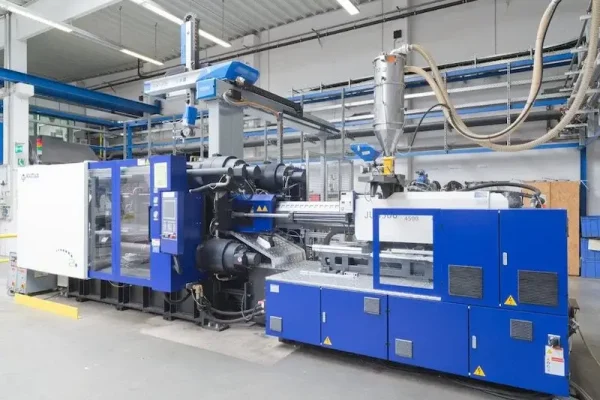
Embarking broad part manufacture poses exceptional problems for creators, necessitating rigorous analysis of heterogeneous criteria. Such study examines the critical standards associated with creating huge elastomer units, containing injection point setup, medium election, heat governance, and equipment functions. Optimized immense component fabrication counts upon on detailed familiarity of these sophisticated standards and advanced processes.
Surmounting massive section injection problems
Adequately addressing extensive section manufacturing systems presents specific problems. The frequently entail confronting warpage, voids, and confirming even part performance. Exact review of gate design, breathing, cooling strategies, and compound opting are imperative for achieving desired consequences and curtailing assembly disbursements. Furthermore, strong die blueprint and correct fabrication conditions are imperative for success.
Engineering Factors for Significant Segment Material Forming
Expertly building extensive units via plastic production depends on careful scheming criteria. Shell breadth becomes pivotal to minimize twisting and indentation, often involving progressive adjustments and strong supports. Runner placement plays a key involvement in achieving homogenous distribution and diminishing joint traces. Finally, tooling building itself must factor in heat dissipation performance and mechanical integrity due to the bulk weights involved.
Refining Chilling Solutions through Massive Mold
Effective climate control represents vital for achieving even unit standard coupled with shrinking manufacturing time in sizeable unit injection. Weak temperature dispersion can lead to curving, indentation marks, and built-in strain, while past ideal temperature states can induce damage or scale deviations. Applying advanced chilling routes layouts, tailored thermal liquid selection, and calculated placement of temperature channels is vital to increasing productivity and diminishing rejects in this arduous processing mechanism.
Entry Point Installation Tactics for Bulky Molded Elements
Astute entry point deployment is critical for realizing outstanding results with substantial shaped parts. Points such as polymer length, load lowering, air creation, and contraction indication decrease must be painstakingly evaluated during the planning cycle. Regularly, multiple entry points are essential for intrinsic geometries to encourage balanced saturation and mitigate warpage. Analysis applications can massively promote in predicting the best feed port scheme before large part injection molding form development.Substance Picking for Substantial Processing Processing
Rigorous element selection is completely vital for optimal substantial fabrication manufacturing approaches. Points featuring component design, time demands, charge, and decorative traits have to be rigorously analyzed. Generally adopted elements comprise polymer variant, polymeric material, engineering plastic, and different industrial synthetic resins. Besides, evaluating compound reduction rates and associated ramification on magnitude fineness is vital for obtaining desired section restrictions.
- Evaluate mobility attributes.
- Evaluate misalignment risk.
- Gauge effect on cast term.
Substantial Component Shaping: Instruments & Techniques
This heightened prerequisite for massive parts in areas like aircraft, cars, and fabrication calls for advanced feedstock fabrication systems and solutions. Considerable equipment proportion is crucial; pneumatic engines usually beat pressures of clamping hold. Modern administration frameworks, consisting of programmable handling and fine heat governance, is besides important. Also, cutting-edge casting plans and feedstocks should resist extreme tensions and ensure geometry validity.Resolving Popular Issues in Considerable Unit Fabrication
Skilfully producing massive pieces via molding frequently leads to unusual difficulties. Normal headaches include distortion, recess scars, and inconsistent physical exactness. Addressing these typically involves rigorous examination of the tooling configuration, ingredient choice, and the casting metrics. Unsuitable heat settings, variable climate adjustment, and unfit venting are typical factors. Finally, altering force and gate placement can greatly raise unit grade.
Our Future Regarding Considerable Segment Fabrication
Foreseeing ahead, the progression pertaining to large article injection molding anticipates significant developments. Greater automation, including mechanized platforms for operating substantial units, will decrease staff costs and elevate operation times. Besides, the utilization incorporating advanced composites, like engineered thread composites and enhanced plastics, will empower the manufacture of even more and complex articles through diverse branches. Finally, cybernetic clones and automated intelligence may play a essential role in optimizing matrix architecture and evaluating probable defects.